Showing posts with label Documentary. Show all posts

Sunday, May 26, 2019

Faberge: A Life of it's Own


There' a fascinating documentary on Amazon called Faberge: A Life of Its Own. It's about the Tsar's famous jeweler. The Tsar had his own jewelry makers and basically his own shop. A large part of the documentary concerns how beautiful, unique objects were created in the palace. Apparently the Tsar's family gave 1,000 gifts a year. The opulence of their life is staggering. It's beautiful: the intricacy, the colors, the craftsmanship, the attention to detail, the decorative flourishes. But this beauty is terrifying when juxtaposed with the starvation of the masses in pre-revolutionary Russia.

A Life of Its Own tells Faberge's own story but continues it after the Revolution, following the fate of the precious eggs -- Faberge's creations that were gifts to the Tsar's family. No two alike, each with a delightful surprise inside, each inspired by a different season or different event. They are amazing. The documentary follows them through the world up till the collector's today.

Sunday, April 28, 2019

The Case Against Adnan Syed

This past week I watched The Case Against Adnan Syed, a four-part HBO documentary about the case explored in season 1 of Serial. The documentary takes off where Serial left. In fact, the response to Serial is a big part of the story, as since the podcast aired listeners contributed information and perspective and the case was appealed in part based on that work.

The Case Against Adnan Syed is ok. It adds a bit to Serial, and it's great seeing the people and the old photos and seeing them interviewed now, about 20 years later. But it's kind of choppy and disjointed. I'm not sure if someone who didn't listen to Serial would get as much out of it. They might be confused.

Frustratingly, The Case Against Adnan Syed doesn't leave viewers with a firmer sense of his guilt or innocence. At least not for me.

You Don't Nomi

Last night I got to see a screening of You Don't Nomi, a documentary by Jeffrey McHale about the 1995 movie Showgirls. I never saw it, mainly because it got terrible reviews and also just looked godawful. You Don't Nomi looks at it as a disaster, dissecting with precision the copious tone deaf and absurd elements. But it also analyzes Showgirls as a spectacular cult phenomenon, and a stunning piece of absurdity. It manages to explain it, mock it, and pay tribute to it all at once.

The documentary uses footage from the director's earlier and later films to great effect, juxtaposing images and thematic tropes that recur over his oevre. It covers all the reviews that exuberantly panned it. It shows it's life in camp culture from San Francisco drag scenes to off Broadway spoofs. It explores the career of the lead actress whose performance is generally recognized as bizarre.  It really does an amazing job of exploring the film. Even though I never saw it, I feel like I understand its life. The scenes from the movie were utterly fantastic. You Don't Nomi is a very funny and very fun movie.

Friday, April 26, 2019

Beyonce Homecoming


I watched the documentary Homecoming about Beyonce's Coachella concert last year. It was phenomenal. The theme of the concert is an homage to historically Black colleges and universities and the concert is modeled on homecoming ceremonies, with dancers and singers and a huge marching style band on bleachers on the stage. The documentary is mainly concert footage but it is interspliced with scenes from rehearsal, quotes from important Black figures in American history, and Beyonce narrating her experience putting the concert together. She has so much vision. The concert was so powerful. I love her stomping assertive singing and dancing style. Her total command. There are a hundred people on the stage an it must have been an intense concert to be at live. Still, the documentary conveyed the enormity of her talent and the intensity of her performance.

Saturday, January 12, 2019

McCain: For Whom the Bell Tolls


I watched the HBO documentary McCain: For Whom the Bell Tolls last summer, months before he passed. The documentary is a sentimental tribute and only briefly looks at him from a critical perspective. Straight line story from the torture he endured in Vietnam to his final days as senator voicing some resistance to Trump. There are interviews with him at his home as he struggles with the brain cancer that he knows it terminal. In spite of resenting how un-critical it was, I was quite moved and teary at the end.

Sunday, October 21, 2018

Boom for Real: The Late Teenage Years of Jean Michel Basquiat


Boom for Real is an exciting documentary about Basquiat. It is an amazing portrait of the 1980s downtown scene. The gritty nostalgia and the explosive youthful talent were stunning. Of course there is the tragedy of his early death looming over the whole thing, but the early years of his art and his life and his friends and his influences is pretty incredible.

Sunday, December 3, 2017

Joan Didion: The Center Will Not Hold

The documentary on Joan Didion, The Center Will Not Hold, is excellent but not satisfying. She is such an accomplished writer, such an icon of the literary world, with so much glamor and history attached to her. The documentary made me ant to revisit her writing, which I enjoyed in several different stages of my life, though mostly in my 20s.

But The Center Will Not Hold didn't give me enough. I wanted to know more about her writing process and more about how she grew and developed as a writer. I also wanted to know more about her personally. There were interviews with her and her family and old friends and editors. But even as she was speaking I felt that she was remote and enigmatic.

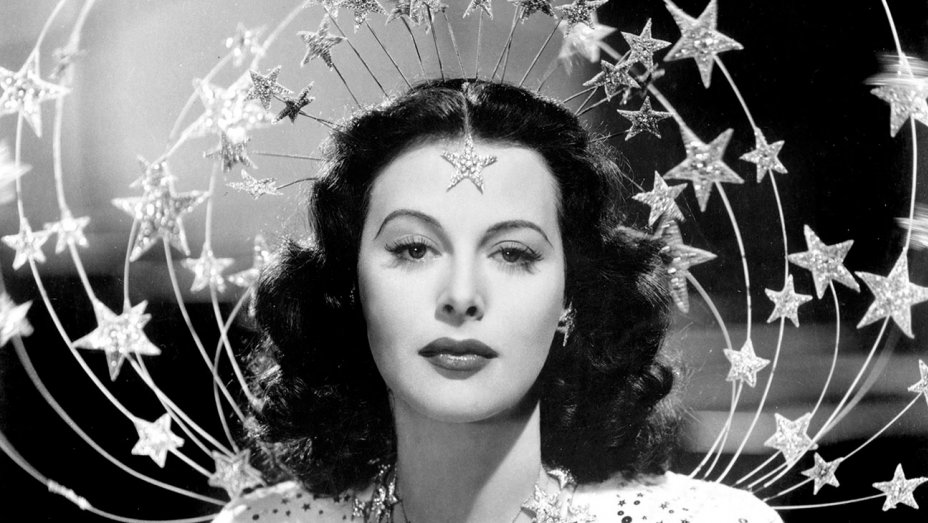
Bombshell: The Hedy Lamarr Story

I had never heard of Hedy Lamarr, so had no expectations going in to the documentary about her life, Bombshell: The Hedy Lamarr Story.

It was fascinating. An assimilated Austrian Jewish girl becomes a Hollywood starlet. She was known as the most beautiful woman in the world. Disney's Snow White was modeled after her. It seems she was an okay actress, not great but passable. Her passion wasn't movies, though. It was inventing. During WWII she worked on a strategy to create signals that couldn't be intercepted. It's called frequency hopping and she patented it. It couldn't be used during that war, but decades later the patent was discovered and her ideas are the basis of many communications technology we have today including Bluetooth and WiFi! She didn't get credit in her lifetime but is now recognized in the tech world for her significant contributions.

Bombshell featured interviews with her children as well as original footage. Her story gets quite sad at the end as she ages and cannot manage the loss of her beauty. The filmmakers were at our screening and held a Q&A session.

Wednesday, August 16, 2017

The Thin Blue Line


I had seen The Thin Blue Line when it first came out and remember being really affected by it. I rewatched it recently and thought it was just okay. It's about a wrongful conviction, and the case is presented in reenactments mixed with interviews of the key players, including the convicted man and the man who really did it. It's good and it's interesting, but I didn't feel riveted. There are too many of these tragic cases and in the cannon of documentaries about the wrongfully convicted this doesn't stand out to me as much as some others.

Sunday, May 28, 2017

Mommy Dead and Dearest


Mommy Dead and Dearest is creepy! An awful, awful story.

It's the story of Gypsy Blanchard, a girl who was raised by a mother with Munchauser by Proxy Syndrome. Since she was an infant, Gypsy's mother made her sick and pretended she was seriously ill. All sorts of diseases and ailments. Drugging her. Not allowing her to walk and putting her in a wheelchair. Lying about her age and dressing her up like silly doll. It is such a disturbing story of very serious, very extensive, very prolonged child abuse.

Then, Gypsy begins an online secret love affair with some weirdo and she has him murder her mother!

The documentary includes many photos and videos, both of Gypsy feigning illness and talking like a developmentally disabled pinhead as well as a perfectly fine Gypsy in bed with her boyfriend. Also included are their text exchanges. The most disappointing parts are the interviews with Gypsy, now in prison. She seems naive and sweet but manipulative and creepy at the same time. The horror of what she went through is unfathomable and she came across as so bland and syrup-y. This documentary raised many more questions than it answered.

Tuesday, March 14, 2017

The Eighties

The multi-episode CNN documentary series The Eighties kind of depressed me. It made me feel so old. The eighties was my coming of age decade, and it was weird to see it presented sort of as a historical relic. The episodes focused on television, Reagan's presidency, AIDS, nuclear disarmament, technology, music, and wall street excesses and deregulation. It was fascinating and I wanted more details on every single segment. Looking back it seemed like a more innocent and homier time, but I guess that is "the ruinous work of nostalgia".

Sunday, February 26, 2017

The Civil War

A couple of weeks ago I watched all nine episodes (11 hours!) of Ken Burns' The Civil War. This sprawling documentary is breathtaking. Richly informative and detailed, it is also has a powerful and consistent emotional core, always coming back to the brutality of slavery, the horror of war, the daily struggle with deprivation. It focusses very much on battles and military strategy, which is only so interesting to me, but these come to life through the characters -- McClullen and Grant and Lee as generals, and the intimate and descriptive letters of several soldiers.

Some things that stayed with me: how religious American society was at that time; the writings of Frederick Douglas; Lincoln's oratory and determination; the violent carnage; the oddity of people being loyal to their state (Lee didn't care about secession or slavery, he cared about remaining loyal to Virginia); the sheer numbers of dead and wounded; the technological and social advancements that developed quickly out of necessity; the evocative and so effective way still photography was used (I watched it in HD)...

I Am Not Your Negro

I had heard a few people mention how amazing I Am Not Your Negro is, but hadn't heard details about it or read any reviews. I was expecting a biographical documentary about James Baldwin. Instead, I Am Not Your Negro brings to life 20 pages Baldwin had been working on about the lives and deaths of Malcolm X, Martin Luther King, Jr. and Medgar Evers. The narration (by Samuel L Jackson) is a reflection on racism in the 60s and 70s, but images and footage of violence from the civil rights era are juxtaposed with images and footage of recent instances of police brutality and murder. The violence that is used to enforce racial oppression is like a crackling fire throughout the documentary. The silence in the theater was tense and mesmerized, and when Martin Luther King Jr was murdered I and others gasped. Even though of course we knew he was murdered, the filmmaker did such a marvelous job of conveying the conflicts of that era and the narrative of the fierce fight for justice, that King's death hit us in the stomach in a freshly powerful way. From that moment until the end of the film tears were running down my cheeks and you could hear others crying. When it ended, even though just a movie, everyone burst into applause. I actually wanted to stand up and give it an ovation. We all sat stunned and shaken during the credits, no one quite ready to put on their coat and return to the rest of their lives.


Monday, October 31, 2016

American Heiress: The Wild Saga of the Kidnapping, Crimes, and Trial of Patty Hearst


Jeffery Toobin's book about Patty Hearst is fascinating. Incredibly detailed and well-researched, it is also a page-turner.

I knew so little about this story -- I only knew it as an example of Stockholm syndrome (which Toobin shows is not a thing, and even if it were, this case is not an example of it). Toobin's American Heiress: The Wild Saga of the Kidnapping, Crimes and Trial of Patty Hearst puts the strange events in the historical context of the 70s, where middle class young people were setting off bombs right and left -- there were far more terrorist incidents then than there have been since 9/11. He provides rich information about the members of the Symbionese Liberation Army -- their backgrounds, and characters, and love lives -- as well as the six months Patty spent with most of them, and her year as a fugitive. I had no idea she was involved in so much violence, but I also did not understand the violence and rage of that decade.

Toobin provides information about the all the players, other than the radicals, so you have a strong sense of the emotion of the drama: Patty's parents, her fiance (who fled the kidnapping immediately), a number of detectives, etc.

The most powerful part is the Afterward. I was so immersed in the detailed, blow-by-blow account of the main action in the 70s, that when he pulls back and jumps into the present I was jolted by the sense of the passage of time, of the history I have lived through, of how different the world is now.

The 13th

The 13th is an incredible documentary structural, systemic, and political racism. It looks at how policy since slavery has served to control and oppress black people. It is a powerful companion piece to Michelle Alexander's The New Jim Crow: Mass Incarceration in the Era of Colorblindness, a book I teach every semester. Both the documentary and the book detail how criminal justice policy, particularly since Nixon, and through to Clinton's crime bill, has made it legal and acceptable to designate black communities to secondary social status. The laws that serve to lock up disproportionate numbers of black americans, and the social policies that allow for discrimination against felons in housing, employment, education, and voting. Many black Americans today face the same obstacles that they did during Jim Crow.

The 13th offers powerful and disturbing visual parallels about violence against black people between the 20th and 21st centuries, and earlier eras of slavery and the KKK.

Sunday, September 4, 2016

Weiner

I was really into the documentary Weiner, about the former congressman whose career was ruined by revelations of his online sexual activities. There was not much in the film I wasn't previously aware of, but there was something fascinating about watching him. The mixture of frustration and pride in his facial expressions. His immaturity combined with an unlikely charisma. Part of his political appeal was his angry speeches and sense of social outrage. But you begin to see in his anger a kind of entitlement.

Also you see glimpses into his marriage, and his wife Huma's sense of betrayal as well as annoyance with him.

There was a scene after the second scandal broke during his mayoral campaign where he made a public appearance and said to someone challenging him, you can judge me, you can not trust me, you don't have to vote for me, but give me chance to talk to everyone here about the issues I am concerned with. This got applause and I liked him in that moment. As crappy as his personal behavior is, I think these sexual scandals are distractions that have little to do with politics, and the moral outrage people express during these episodes seems tiresome and hypocritical to me.

The Brainwashing of My Dad

The Brainwashing of My Dad is a documentary that explores the intense impact right wing media, particularly Fox News, has had on so many Americans, particularly older generations. The filmmaker starts with her father, who had long been politically moderate. She noticed that at some point he had become increasing irate and agitated about a number of social and political issues, and after a while she realized that Fox News and talk radio were getting him so riled up that he was no longer the same person.

As she began to explore the history of media and politics from the mid-twentieth century up to today, she learned that many people were having similar experiences with their parents. She highlights different strategies around rhetoric and message and the tenor of outrage these media use.

I thought it was very interesting, but I would have liked more in-depth analysis of the media, and less bells and whistles in the narrative.

Sunday, August 28, 2016

The Imposter

The Imposter tells such a strange story! It's a documentary about a boy in Texas who goes missing, and is found nearly four years later in Spain. But it's not him. At all. Even though the boy's family accepts him and lets them in to their lives as if he were their missing son.

The Imposter is about a European guy who has a compulsion to impersonate abused and missing teenagers. He was 23 when he convinced authorities he was the missing 16 year old from Texas. Even though he has brown eyes and the missing boy has blue. There are many strange things going on, and it is creepy how the family seemed to accept him without question.

Friday, April 22, 2016

A Murder in the Park

The wrongful conviction of innocent people is a horror and injustice that I find very hard to bear. I've been deeply grateful for the Innocence projects that have been doing such great work exonerating people.

A Murder in the Park looks at a famous exoneration in Illinois that was spearheaded by a journalist professor and his undergraduate students. This chilling documentary exposes their sloppy work and the biased determination of the professor and his private investigator to implicate someone else. In this case, the exoneree's innocence, and the guilt of the person eventually convicted for the same crime, are extremely suspect.

The Seventies

The Seventies is an 8-part documentary series produced by CNN. It covers: 1. The television; 2. Watergate; 3. Vietnam; 4. Crime; 5. The presidencies (Ford and Carter); 6.The feminist movement and sexual revolution; 7. International terrorism; and 8. Music.

As a kid during that decade I didn't really know what was going on but I was aware of it all. And of course as I grew up I learned more and more about the era.

The episode on TV was fun and brought me back and impressed me with how much was innovative, socially relevant, and even radical. Because I am more familiar with the pop culture, this episode seemed a little fast and superficial and seemed to leave much out and not to go into enough detail.

The episodes on Watergate, Vietnam, and Ford to Carter to Reagan, ending the decade, were fascinating to me. Very informative (which perhaps says more about my ignorance), and left me feeling quite sad. I felt emotional when they showed Nixon resigning.

I thought the episode on Crime was very boring and hardly paid attention.

The episode on terrorism also seemed superficial. There were so many intense conflicts, there is no way to cover them all in an hour.

The women's movement episode was interesting, and kind of inspiring, but like the others, I wanted more depth and breadth.

The music episode wasn't that great either. Just sort of a review of different genres as they emerged.